
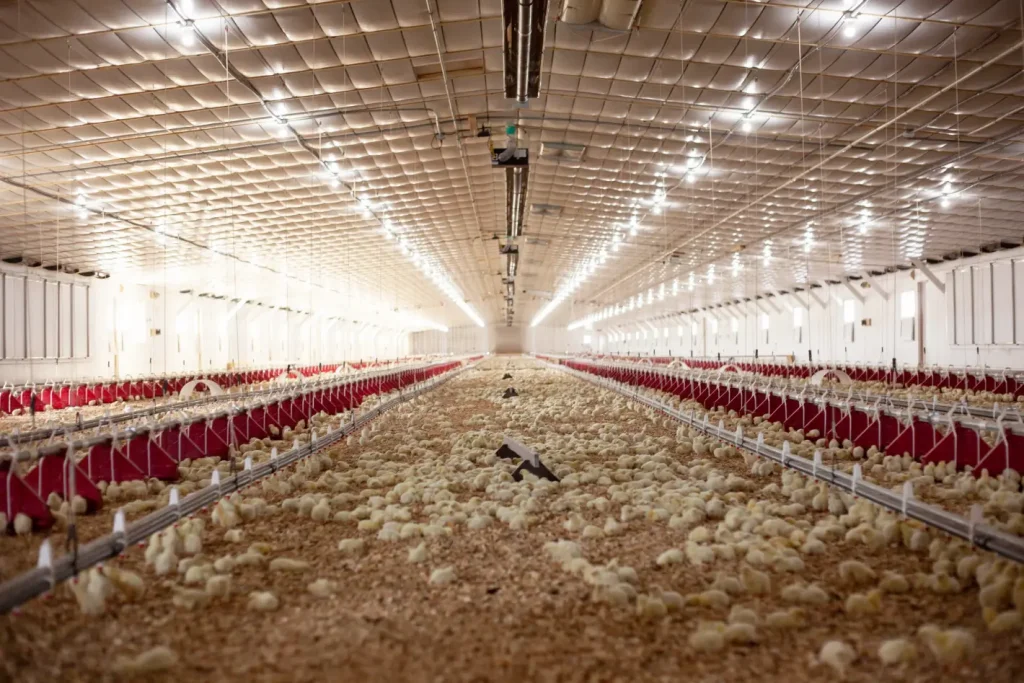
How Proper Poultry Lighting Improves Feed Conversion and Bird Uniformity
In modern poultry production, lighting is no longer just a basic facility. It has become a biological management tool that directly influences bird behavior, feed conversion ratio (FCR), growth uniformity, and overall farm profitability.
Many poultry farms still focus primarily on feed formulation and genetics, while overlooking the impact of lighting quality and control. In practice, lighting often delivers one of the fastest and most measurable returns on investment.
Why Lighting Directly Affects Poultry Performance
Birds perceive light very differently from humans.
Light intensity, distribution, spectrum, and dimming behavior all influence:
- Feeding activity
- Movement patterns
- Stress levels
- Rest cycles
When lighting conditions are poorly designed, common problems occur:
- Bird clustering in bright or dark zones
- Uneven access to feeders and drinkers
- Increased stress during sudden light changes
- Reduced efficiency during chick placement and vaccination procedures
Over time, these issues translate into higher feed consumption and inconsistent body weight.
Common Lighting Issues in Poultry Houses
Based on field experience, the most frequent lighting-related problems include:
- Non-uniform illuminance across the house
- Abrupt ON/OFF switching without dimming control
- LED products designed for humans rather than poultry vision
- Inconsistent brightness caused by voltage drop in long installations
- Lighting instability or fixture failure caused by power grid fluctuations or lightning events, negatively impacting farm performance
These issues are especially critical during the early growth stages.
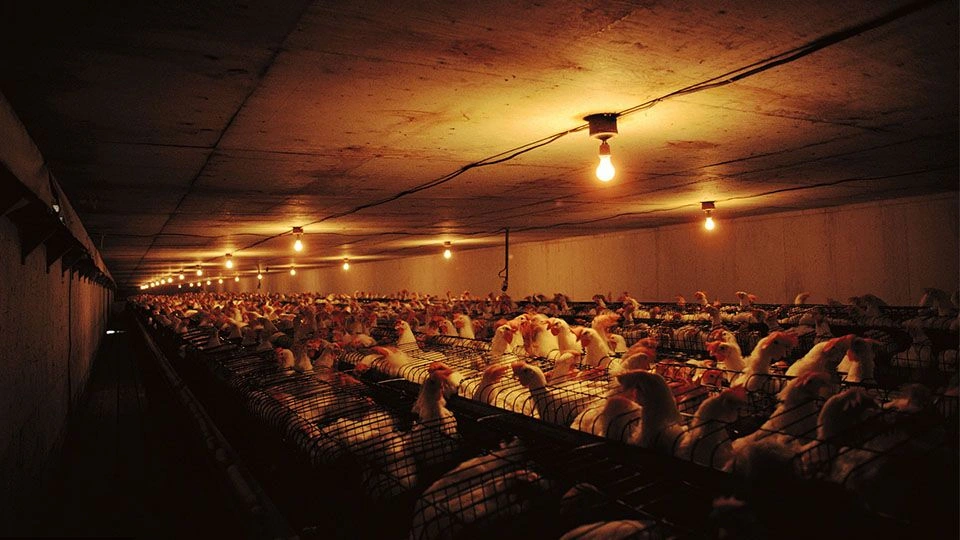
Case Study: Australian Poultry Farm Lighting Upgrade
In Australia, poultry lighting is not only a matter of efficiency, but also compliance with animal welfare standards.
Organizations such as RSPCA Australia define minimum lighting requirements to ensure proper visibility, bird welfare, and daily farm operations.
One of our Australian customers approached us during a lighting upgrade project, as their existing system struggled to meet two conflicting requirements:
- Sufficient brightness to comply with animal welfare guidelines
- The ability to dim smoothly to low light levels for rest periods and stress reduction
Their previous lighting solution could either become bright enough, or dim low enough — but not both reliably.
Lighting Solution Provided
We supplied 8W/900lm poultry-specific LED lamps, designed to deliver:
- Adequate maximum brightness to meet RSPCA-related welfare expectations
- Stable and smooth dimming down to very low light levels
- Consistent output across the entire poultry house
Rather than increasing wattage unnecessarily, the focus was placed on light distribution, controllability, and system stability.
Results and Improvements
After the upgrade, the customer reported:
- Improved overall light uniformity across the house
- Better compliance with animal welfare lighting requirements
- More flexible lighting management for different growth stages
- Reduced stress during lighting transitions
Most importantly, the farm achieved a lighting environment that could be bright enough when required, and sufficiently dim when needed—without compromising system stability.
Key Takeaway
In regulated markets such as Australia, poultry lighting must balance:
- Animal welfare compliance
- Farm management flexibility
- Long-term system reliability
A well-designed lighting system should not force farms to choose between brightness and dimming capability—it should deliver both.
Case Study: Italian Poultry Farm Lighting Upgrade
We recently supported an Italian poultry integrator operating multiple broiler houses.
Although LED lighting was already installed, the farm faced:
- Uneven bird growth
- Higher-than-expected feed consumption
- Stress during lighting transitions
Instead of increasing lamp wattage, the solution focused on system optimization.
Key improvements included:
1. Uniform Light Distribution
Lighting layout and spacing were optimized to achieve consistent illuminance throughout the house, reducing bird clustering and improving movement balance.
2. Smooth Sunrise & Sunset Dimming
Gradual dimming curves replaced abrupt switching, minimizing stress and stabilizing feeding behavior.
3. Poultry-Optimized Light Spectrum
The lighting spectrum was selected to better match poultry visual sensitivity, supporting calm behavior and consistent activity levels.
After one full production cycle, the farm reported:
- Improved bird uniformity
- Measurable improvement in FCR
- More predictable production results across houses
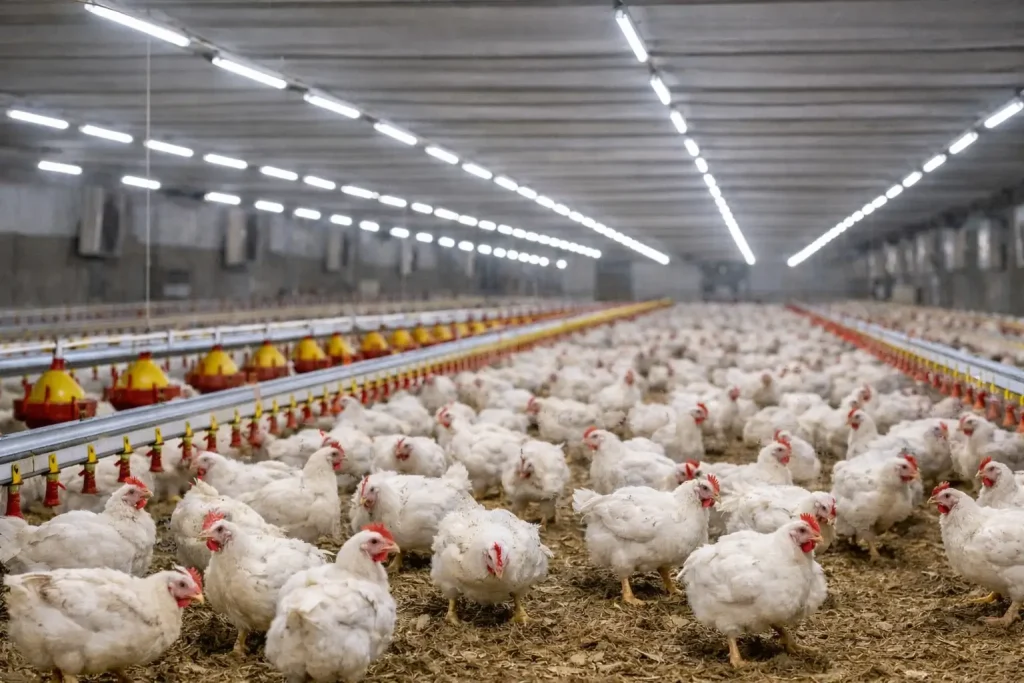
Key Technical Considerations for Poultry Lighting
When evaluating poultry lighting systems, farms and integrators should focus on:
- Light uniformity rather than peak lux values
- Stable dimming performance (0–100%)
- Electrical compatibility for long cable runs
- Reliability in high-humidity environments
Lighting should be designed as a system, not just a lamp.
New Builds vs Retrofit Projects
- New poultry houses allow full optimization of layout, wiring, and control systems.
- Retrofit projects require careful matching with existing electrical infrastructure and mounting conditions.
Both scenarios can achieve significant performance improvements when lighting is properly engineered.
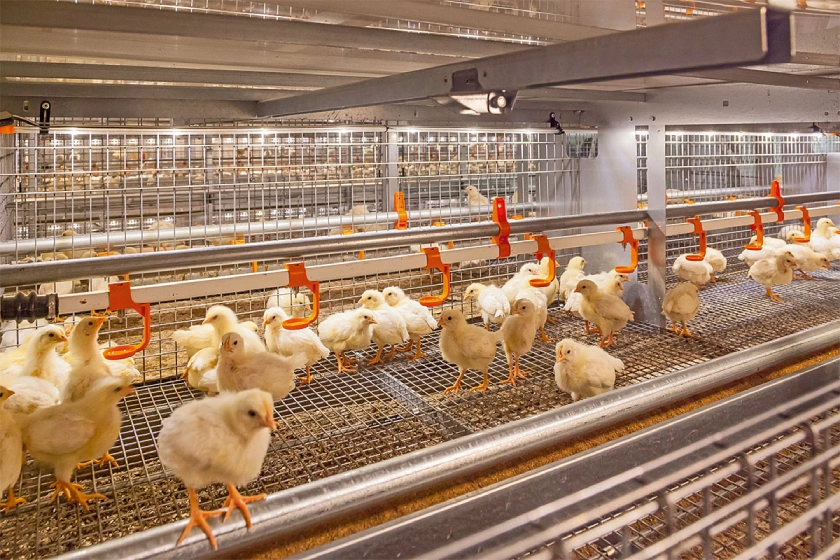
Conclusion
Proper poultry lighting is not a cost—it is a management investment.
By improving bird uniformity and feed conversion, well-designed lighting systems often deliver returns faster than expected.
If you are planning new poultry houses or upgrading existing farms, optimizing lighting strategy should be a priority from day one.
Looking to optimize poultry lighting for new or retrofit projects?
Feel free to contact us to discuss lighting solutions tailored to your farm conditions and local standards.

