

Introduction
In supermarket renovation projects, lighting is often the first element to be upgraded—even before shelves, signage, or layout changes.
This decision is not driven by design trends.
It is based on customer perception, operational efficiency, and long-term maintenance considerations.
For supermarket owners, operators, and project managers, upgrading lighting is one of the fastest ways to modernize a store while keeping disruption to a minimum.
Common Lighting Problems in Existing Supermarkets
In many existing stores, outdated lighting creates a range of issues that directly affect both customers and daily operations:
- Uneven brightness across aisles
- Dark corners in key shopping areas
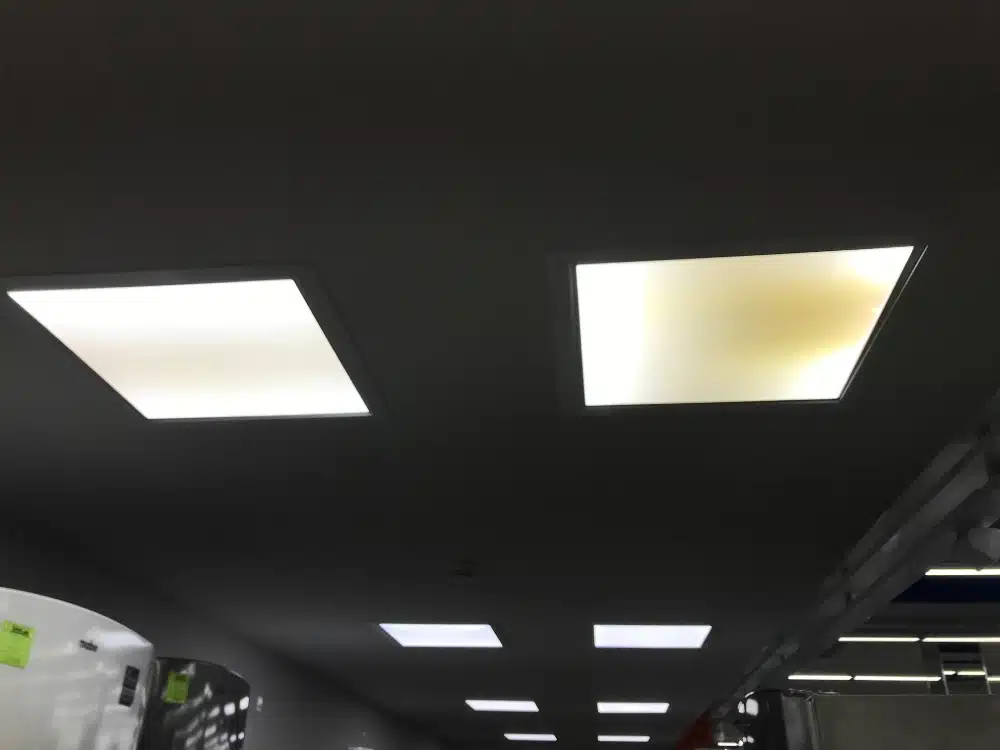
- Yellowed diffusers that make the store look aged and outdated
- Visible insect marks or dark shadows inside fixtures, creating an unclean impression
- Higher energy consumption compared to modern LED systems
- Frequent maintenance caused by unstable drivers or short fixture lifespan
While shelves and displays can be replaced gradually, poor lighting impacts the entire store experience every day.
Why Lighting Is Often Prioritized in Renovation Projects
1. Immediate Improvement in Customer Perception
Lighting strongly influences how customers perceive a supermarket’s:
- Cleanliness
- Freshness
- Comfort
- Product quality
Even without changing store layout, upgrading lighting can instantly make a supermarket feel brighter, cleaner, and more modern.
From a project perspective, good lighting planning is not about selecting a single lamp model.
It is about choosing commercial-grade solutions such as LED panel lights for supermarket environments that ensure:
- Consistent brightness across the store
- Stable performance for long daily operating hours
- Easy maintenance over the coming years
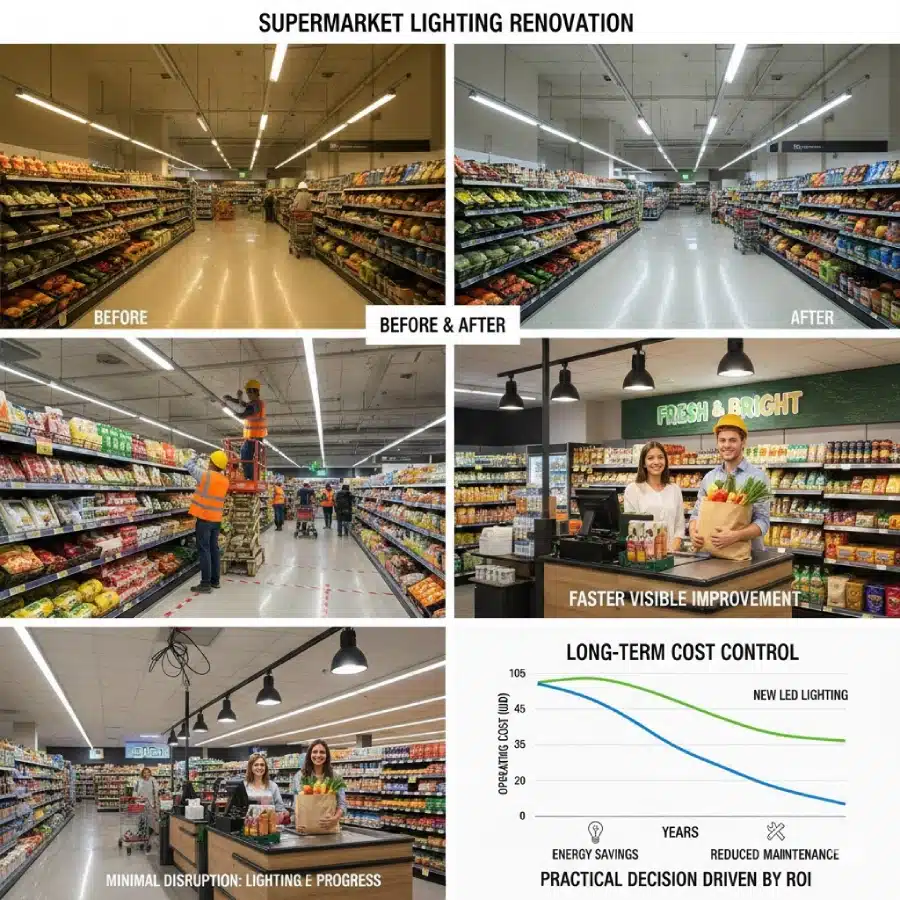
2. Minimal Disruption to Daily Operations
Unlike structural renovations, lighting upgrades can often be carried out:
- Section by section
- During off-hours
- Without closing the store
This makes lighting renovation especially suitable for operating supermarkets that need to stay open while upgrading.
3. Fast and Measurable Return on Investment
Lighting renovation typically delivers ROI through:
- Reduced electricity consumption
- Lower maintenance frequency
- Longer fixture lifespan
- Fewer unexpected failures
In many supermarket projects, lighting upgrades offer one of the shortest payback periods among renovation investments.
Renovation vs. Lighting Retrofit in Supermarket Projects
In supermarket projects, renovation and lighting retrofit are closely related but not identical.
- Renovation refers to the overall store upgrade, including layout, finishes, and systems.
- Lighting retrofit focuses on upgrading lighting technology while keeping existing structures intact.
Most supermarket projects involve renovation planning combined with lighting retrofit execution, allowing teams to improve performance without unnecessary construction work.
Key Areas Where Lighting Matters Most in Supermarkets
Not all areas of a supermarket require the same lighting approach.
In practice, general lighting in most retail zones is commonly handled by commercial LED panel lights because of their uniform brightness and clean visual appearance.
Priority areas typically include:
- Fresh food and produce sections
- Refrigerated display zones
- Main aisles and promotional areas
- Checkout and cashier zones
- Back-of-house and storage areas
Targeted lighting upgrades in these zones often deliver the highest visual and operational impact.
Why Commercial-Grade Lighting Is Essential for Supermarkets
Supermarket lighting is fundamentally different from office or residential lighting.
Key requirements include:
- Long operating hours (often 12–16 hours per day)
- Stable drivers designed for continuous use
- Consistent brightness and color temperature over time
- Easy replacement and maintenance
- Compatibility with emergency lighting systems
Fixtures designed specifically for commercial retail environments ensure reliability throughout a 5–8 year operational cycle.
Lighting as a Long-Term Operational Decision
Lighting should not be treated as a one-time purchase.
For supermarket owners and retail groups, long-term value comes from:
- Model consistency across multiple stores
- Long-term availability of the same fixtures
- Simplified maintenance and spare parts management
- Standardized specifications for future expansion
Well-planned lighting standardization supports faster store rollout and easier operation management.
Conclusion
In supermarket renovation projects, lighting is often prioritized not because it is simple—but because it is strategic.
A well-executed lighting upgrade:
- Improves customer experience
- Enhances store appearance immediately
- Reduces long-term operating costs
- Supports stable and scalable retail operations
For supermarket owners and project teams, lighting is not just about brightness—it is about performance, reliability, and perception over time.

